Translate

Featured post

क्षेत्रीय सुरक्षा , शांति और सहयोग की प्रबल संभावना – चीथड़ों में लिपटी पाकिस्तान की राष्ट्रीयत

“ क्षेत्रीय सुरक्षा , शांति और सहयोग की प्रबल संभावना – चीथड़ों में लिपटी पाकिस्तान की राष्ट्रीयत ा “ —गोलोक विहारी राय पिछले कुछ वर्षों...

Showing posts with label भारतवर्ष- बंगलादेश. Show all posts

Sunday, 28 October 2012

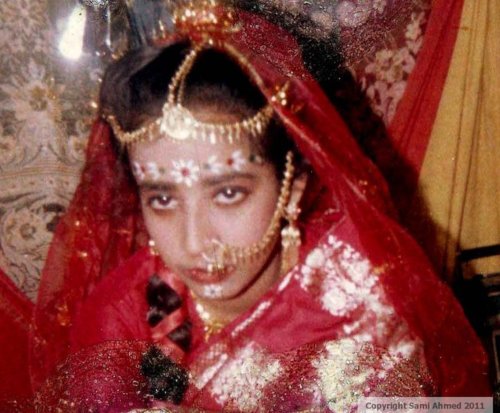
Child Marriages Blight Bangladesh


Child Marriages Blight Bangladesh

Bangladesh has one of the highest rates of child marriage in the world, with 20% of girls becoming wives before their 15th birthday, even though 18 is the minimum age allowed by law. Why?
“It is the new kind of slavery,” says Mirna Ming Evora, who’s the country director for the NGO Plan International.
“Here girls are a burden, they don’t earn income in this culture.”
Which means they are totally dependent on their families to support and protect them and pay their dowries. That’s the money a father must pay to a future husband to secure a marriage.
“Dowry for a very poor family is work of a lifetime, they’d rather start early because the dowry is not too high. The girl is more saleable.”
She’s met many of these child brides.
“They say to me I lost my childhood.”
Read more »

Saturday, 20 October 2012

Bangladesh to hand wanted separatist leader to India


Bangladesh to hand wanted separatist leader to India

Despite trade disputes and water-sharing spats, the two South Asian neighbours made remarkable strides in security co-operation in recent years.
Bangladesh and India are drawing closer to inking an extradition treaty that would formally enable them to hand over wanted criminals and terrorists sheltering in their respective countries. The home secretaries of India and Bangladesh held two days of talks in Dhaka Monday and Tuesday (October 15th-16th) to share final drafts of the long-awaited treaty.

But even without such formal mechanisms and despite their differences on many other fronts, the two neighbours have shown a willingness to co-operate on certain security issues because violence has affected both countries so deeply.

In late September, more than two weeks before the latest round of extradition talks, Bangladesh announced it planned to hand over wanted separatist leader Anup Chetia, who has been languishing in a Bangladeshi prison for more than a decade.

"We are going to repatriate Anup Chetia by this December, and the process has already started," Bangladesh Home Minister Mohiuddin Khan Alamgir recently confirmed to Khabar South Asia.

Leader of the United Liberation Front of Assam (ULFA), Chetia was arrested in Dhaka in 1997 and sentenced in 2000 to five years in prison for illegal entry and possession of fake passports. He has remained in custody in Bangladesh ever since.

A member of the Indian delegation attending the recent talks in Dhaka voiced his country's pleasure at the decision.

"We are happy with the proactive attitude of Bangladesh towards countering terrorism in this region," Shambhu Singh, joint secretary at the Ministry of Home Affairs, told Khabar. It has finally agreed to hand over Anup Chetia to us by the end of 2012 and sought some time to finalise and sign the extradition treaty with India."

Even if the treaty is not signed by December due to technical and legal complications, Chetia's transfer could well go ahead via an informal mechanism.

He could be released along the border and immediately picked up by the Indian Border Security force (BSF) members, who would be alerted beforehand by Bangladesh authorities.

This unwritten formula has been applied in the past two years to more than two dozen wanted terrorists handed over to the authorities in both countries.

To reciprocate Dhaka's gesture, New Delhi expressed its willingness to deal with Bangladeshi fugitives living in India.

"We're also working to catch the criminals and will take appropriate action," BSF chief U. K. Bansal told reporters in Dhaka last month after meeting his Bangladesh counterpart.

Bangladesh has particularly sought the extradition of Risaldar Moslehuddin and Captain Majed, both believed to be hiding in India. In 1998 they were sentenced to death in absentia along with ten others for murdering Sheikh Mujibur Rahman, the country's founder and father of Prime Minister Sheikh Hasina.

Although bilateral disputes over trade tariffs, border issues and water sharing remain unresolved, Dhaka and New Delhi have made considerable progress in fighting terrorism.

"Terrorism is not an India or Bangladesh problem. It is now an issue afflicting the entire South Asia and even the world," Mohiuddin Ahmed, a former diplomat, told Khabar.

"It is in their own self-interest that they have come together to fight the menace, despite the fact that they have not been able to resolve some major bilateral issues."

Another area where the two countries have made some progress is in fighting drug smuggling. In recent times, India, acceding to Bangladesh's request, has dismantled many illegal factories along its border manufacturing Phensedyl, a syrup widely used as an intoxicant by Bangladeshi youth.

"We gave them a list of 79 illegal Phensedyl manufacturing factories across the border last year and India has dismantled most of them," Mohammad Iqbal, Director General of Narcotics Control Department, told Khabar.

He said this year another list of 62 such factories has been given to Indian authorities, who promised to take action.

"Their co-operation has really helped us a lot to crack down on Phensedyl use among the youth largely because the smuggling of the syrup has been drastically reduced," Iqbal told Khabar. 
Read more »

Wednesday, 17 October 2012

Violence Against Women Persists in Bangladesh


Violence Against Women Persists in Bangladesh

Violence against women is on the rise in Bangladesh. Credit: Naimul Haq/IPS
DHAKA, Oct 17 2012 (IPS) - Bangladesh, often cited as a model of progress in achieving the United Nations Millennium Development Goals (MDGs), appears to be sliding backwards when it comes to dealing with violence against women (VAW). 
Police statistics and assessments by non-government organisations (NGOs) working to establish women’s rights show that there is in an increasing trend in VAW. 
According to police records, while there were 2,981 cases of dowry-related violence in 2004, the figure has already hit 4,563 in the first nine months of 2012. Also, where there were 2,901 rape cases recorded in 2004, the figure for the current year, up to August, stands at 2,868. 
Farida Akhtar, an internationally known rights activist, told IPS that the disturbing aspect of this rising trend in VAW is that it is “taking on different deceptive forms that go beyond the statistics.” 
“When women are better aware of their rights through education, and want to assert them, they suffer violence,” said Akhtar, a founder of the NGO, ‘UBINIG’, acronym for ‘Policy Research for Development Alternatives’ in the Bangla language.     
With school enrolment at 95 percent, Bangladesh is well on track to achieving the MDGs that deal with gender parity in education by 2015. But gender equity and women’s empowerment are another matter.  
Akhtar said there is evidence that Bangladeshi women are now facing more mental torture than before. “Unfortunately, mental torture cannot be quantified and often goes unreported. But, the fact that suicide is the biggest cause of female deaths in this country is telling.” 

Women’s rights leaders say that atrocities go unreported because of fear of harassment by religious or political leaders and, of the cases that are registered, a large number end up being dismissed as false allegations. 
Police data show that 109,621 complaints of various forms of VAW were lodged during the 2010-2012 (up to August) period.  Of these, 18,484 complaints were taken into cognizance, but only 6,875 cases were deemed ‘genuine’ and fit for further proceedings. 
Mohammad Munirul Islam, additional inspector-general of police responsible for dealing with crimes related to VAW at the police headquarters, told IPS, “On many occasions our investigations showed that the law was used to harass the accused. It does seem that not all complaints are genuine.” 
Afroza Parvin, executive director of Nari Unnayan Shakti, a women’s rights NGO, told IPS, “Due to better awareness female victims have learnt to raise their voices, but stop short of seeking police help. During our 20 years of experience on VAW we have found that police often do not cooperate with victims and favour the accused.” 
Leading women’s movement activist Shireen Huq says that the main difficulty is that of “establishing a prima facie case for lack of eye witnesses, evidence, etc., with the result that the accused are easily acquitted and cases are recorded as false.” 
Huq, who is also a founder member of Naripokkho, a local NGO, told IPS that “no matter what the offence or what the form of violence, police and lawyers find it convenient to file the complaint under ‘torture for dowry’, and since this is a non-bailable offence we often hear of the elderly parents of the accused being arrested.” 
Failure to fulfill dowry demands is a major cause for VAW in Bangladesh. On average 5,000 complaints of dowry are recorded annually. In 2010, police reported 5,331 cases of dowry, which jumped to 7,079 in 2011. 
Despites the debates, official statistics show that VAW continues unabated and many complaints are dismissed without justice. Data from Bangladesh National Women Lawyers’ Association (BNWLA) show that of the 420 recorded rape cases in 2011, only 286 reached the prosecution stage. 
Salma Ali, executive director of BNWLA, told IPS that one of the difficulties in establishing the rights of women is the fact that Bangladeshi society is strongly patriarchal. “This means that women suffer discrimination in respect of matrimonial rights, guardianship of children and  inheritance – often through religious injunctions or directives,” the prominent lawyer said. 
Hameeda Hossain, chairperson of Ain-o-Shalish Kendra, a leading women’s rights  organisation, told IPS that if  “women are still suffering socially, culturally and politically” it is due to “social acceptance of women’s subordination, discriminatory laws and poor law enforcement.” 
“Crimes against women within the family are often ignored, and the women  silenced,” Hossain said. “There is social tolerance of domestic violence and limited intervention.” 
To its credit the Bangladesh government has taken a number of legal steps to  improve the situation of women, starting with the Suppression of Violence against Women and Children Act in 2000. In 2009 the National Human Rights Act was passed followed by the Domestic Violence Act in 2010.   
Bangladesh is also signatory to international conventions designed to protect women and their rights. Yet, very little is being done on the ground to ensure a secure and safe environment for them, rights activists say.
Read more »

Wednesday, 26 September 2012

BSF detains Bangladeshi police officer

Bangladesh is the protector of criminals. and  Bangladeshi police is host of criminals.

BSF detains Bangladeshi police officer


The Indian Border Security Force on Tuesday detained a Bangladeshi police officer from Sankuchail border of Buriachang upazila in Comilla.
The incident took place on the eve of a director general level conference between the Border Guard Bangladesh and the BSF to be held at the Peelkhana headquarters.
Assistant subinspector Nurunnani of Buriachang police station was caught by Indian nationals while he went to the bordering area between 8:00pm and 8:30pm to ‘arrest criminal’ following a court warrant, the police said. Nurunnabi, in uniform, was carrying his pistol, a police officer said. 
‘Border Guard Bangladesh officials are communicating with the BSF over the matter,’ Buriachang upazila nirbahi officer Mohammad Khurshed Alam Khan told New Age.
He, quoting BGB officials, said the ASI was unhurt and the authorities were working to bring him back.
The police could not confirm exactly what happened with him.
But, the police officer told New Age that Indian nationals caught Nurunnabi and handed him over to the BSF.
The DG level border conference will begin today.
Read more »

Hasina says she would expose people behind it

Hasina says she would expose people behind it


PM has expressed her resolve to investigate into the alleged corruption in awarding the contract for supervising of Padma project as well as find out the ‘real culprits’ who had influenced the WB to cancel its credit for the infrastructure project.
‘We would not spare those behind the cancelling the WB fund...we are determined to find out the real culprits,’ Hasina said while speaking at the council session of the US chapter of Bangladesh Awami Swechhasebak League at Grand Hyatt Hotel in New York Monday night.
Referring to her meeting with the new president of the World Bank at a programme in New York, Hasina said she
welcomed the bank’s reengagement with Padma Bridge construction.
She also informed him of her resolve to carryout a full-scale investigation into corruption allegation brought by World Bank.
‘We welcome the decision of the World Bank. But I have told the World Bank president that I also want fully inquire into the matter. I want to know why the previous funding was cancelled and want to know the real story behind the cancellation of the fund,’ she said.
Hasina who is in New York to attend the 67th UN general assembly session said that her government had decided to build the bridge with domestic resources after the WB cancelled its funding.
‘When we finalised everything, the World Bank has returned to fund the bridge,’ she said.
The prime minister said the Anti-Corruption Commission was carrying out its inquiry independently. She told the World Bank to engage its people in helping the inquiry.
Without mentioning the name of Nobel laureate Muhammad Yunus, Hasina said one individual just for holding the post of managing director of a bank had influenced the World Bank to cancel the funding.
Hasina said she did not want to mention the name of the individual as everybody knew about him.
She said that the individual wanted to continue as the managing director of the bank though he is well past the retirement age.
She said Awami League never patronized corruption, and the question of its involvement in corruption in the Padma Bridge Project was beyond imagination.
Hasina said that the World Bank had stopped funding road and bridge construction in 2005 when BNP was in power because of corruption.
On assuming office, Hasina said, her government took the initiatives to bring the World Bank back to funding construction and reconstruction of the country’s roads and bridges.
Hasina said that during its tenure in office BNP indulged in corruption, money laundering, making black money and looting public wealth.
She asked Khaleda Zia why she was not facing trial in Zia Orphanage Case. Khaleda knows that the truth would come out if she faces questions from lawyers, said Hasina. 
The prime minister assured Bangladeshis living in America that her government would complete the trial of the war criminals.
Chaired by the USA chapter Awami Swechhasebak League convener Mahiuddin Dewan the session was addressed by foreign minister Dipu Moni, AL organising secretary AFM Bahauddin Nasim, ASL president Molla Mohammad Abu Kawser, general secretary Pankaj Devnath, USA AL chapter president Siddiqur Rahman and general secretary Sajjadur Rahman Sajjad.
Read more »

Monday, 24 September 2012

with collaboration of Huji..... It is a bodes ill to Hsina & India and Pakistan and China grin

Khaleda embarks on mass contact tour


Several thousand leaders, activists and supporters of the Bangladesh Nationalist Party greeted the party chairperson, Khaleda Zia, when she arrived in Bogra on Saturday on her way to Dinajpur.
She will address a public meeting at Gora Shaheed ground in Dinajpur town this afternoon to kick off her mass contact tour. 
The local unit of the BNP-led ‘18-party’ alliance has organised the rally. 
Khaleda embarked on the mass contact tour to mobilise the people for holding of the next general elections under a ‘non-party neutral’ caretaker government.
The BNP chief is scheduled to stay overnight at Bogra circuit house and start for Dinajpur this morning.
A large number of leaders and activists of BNP and its front and associate organisations lined the road at different points and greeted the opposition leader as her motorcade passed by. Khaleda from her white jeep waved to the party supporters.
The party activists chanted welcome slogans and showered petals at Uttara, Tongi, Joydevpur, Konabari, Mouchak, Shafipur, Chandra and Kaliakoir of Gazipur district, Gorai, Mirzapur, Delduar, Basail, Karatia, Nagarjalfy, Elenga and Ibrahimabad of Tangail, Saidabad, Kodda and Hatikumrul of Sirajganj and Chandaikona, Sherpur and Majhira of Bogra district.
Many carried portraits of BNP’s founder Ziaur Rahman, Khaleda Zia and Tarique Rahman as well as local leaders who are aspirants for party nomination for contesting the next elections.
The BNP chief left her Gulshan house at 4:15pm for Dinajpur.


Read more »

Sunday, 15 July 2012

$1b credit can be used for Padma bridge: Indian official


$1b credit can be used for Padma bridge: Indian official


Indian officials on Friday said New Delhi does not have any objection to the diversion of its $1 billion credit line for constructing the Padma bridge as the World Bank scraped loan exposing the project to a difficult state.
"We earlier said the credit could be used for any purpose suitable to your need. Bangladesh can use the fund for the Padma bridge project," a senior foreign ministry official told BSS as he was approached for comments about the possible diversion.

But, the official, preferring anonymity, said Padma bridge was a big project requiring more amounts "but you can start with the Indian credit".

The economic relations division officials in Dhaka, however, called the Indian foreign office comment a "difficult proposition" as much of the credit amount was already channelled for different infrastructure projects, mostly in railway sector.

"Moreover, there are some technical aspects which need to be resolved for the diversion," ERD Joint Secretary Asifuzzaman, who deals with the foreign credit affairs of the division, told BSS.

He, however, said Bangladesh so far did not approach India for the fund diversion or received any proposal from New Delhi in this regard.

Indian officials said under the $1 billion credit line, the two countries until now finalised nine projects while ERD officials in Dhaka said process was underway to finalise more projects which would require half of the credit amount.

Dhaka and New Delhi signed the $1 billion loan agreement to finance infrastructure development in Bangladesh two years ago while the amount was the biggest credit package by India to any nation.
Read more »

Tuesday, 10 July 2012

Cabinet endorses Padma Bridge with own funds


*DU to collect money for Padma Bridge


*Japan hopeful of new framework


Cabinet endorses Padma Bridge with own funds


The cabinet on Monday endorsed the prime minister’s proposal for beginning construction of the Padma Multi-purpose Bridge with self-finance without delay.
The government’s decision to construct the Padma Bridge with domestic funding came after global lender World Bank had cancelled its $1.2 billion credit for the mega project over corruption allegations in selection of consultants for supervising the construction work. 
Presiding over the weekly cabinet meeting at the secretariat, the prime minister, Sheikh Hasina, asked the finance division and the economic relations division to work out how much money would be required in foreign and local currencies and explore their possible sources for implementation of the $ 2.9 billion project. 
‘The cabinet has decided not to approach World Bank any further for review of its decision,’ cabinet secretary Mohammad Musharraf Hossain Bhuiyan told reporters after the meeting.
He said that the prime minister had directed all ministries to prioritise development projects and set aside funds for the Padma Bridge construction. The projects not much necessary now could be omitted from the current fiscal after scrutiny for saving funds for the bridge, Musharraf added. 
All cabinet members, the secretary said, backed the prime minister’s proposal for mobilising domestic funds to implement the Awami League government’s priority project to construct the 6.1 kilometres rail-cum-road bridge over the River Padma. 
‘We can discuss the matter again only if the World Bank realises its mistake. We will not initiate any talks on our own,’ the secretary said, referring to the cabinet decision. 
He said that a number of ministers had talked about the Padma Bridge issue and WB’s decision to scrap its funds for the project as the 2012-13 budget implementation strategy was placed in the cabinet for discussion. They termed arbitrary the WB’s decision to scrap the credit. 
On June 30, the World Bank cancelled its credit for the Padma Bridge saying it had proof of ‘corruption conspiracy’ involving Bangladeshi officials, executives of Canadian firm SNC- Lavalin and individuals. In September, the global lending agency withheld disbursement of the credit following allegations of corruption in the bidding process halting the implementation of the project.
Monday’s cabinet meeting, however, decided to appoint British company Halcrow, the second lowest bidder after Lavalin, for supervising implementation of the project, a senior minister told New Age. 
The prime minister also asked the bridge division for steps to begin construction of the main structure of the bridge soon. 
The cabinet was told that a total of $275 million was required in the current fiscal for the project. 
Finance minister AMA Muhith assured the cabinet that Bangladesh Bank alone could provide $1billion from its $13 billion reserve while the National Board of Revenue could raise its revenue target and thereby contribute to the project. 
The cabinet secretary said patriotic people, including expatriates, were willing to contribute to the project.
He said funds would be mobilised from domestic sources, including banks and insurances after examining their possible implications on the country’s overall economy. 
The government would continue negotiations with three co-financers – Asian Development Bank, Islamic Development Bank and Japan International Cooperation Agency – for funding the project, he said.
The prime minister, Sheikh Hasina, on Sunday rolled out a road map for construction of the Padma bridge and told parliament that work on the mega project would begin soon by mobilising internal resources and with assistance from the people of the country.
In her closing speech at the 13th session of parliament, she said the government would spend a total of Tk 22.55 thousand crore on the project. 
Hasina also blamed the World Bank for wasting time over the Padma Bridge project and asked the finance minister to explore ways for realising compensation from the bank for delaying the project by more than one and a half years.
She said the government might be forced to drop some other development projects to build the bridge that would connect the south-west and central regions with capital Dhaka and the port city of Chittagong.

DU to collect money for Padma Bridge


Dhaka University authorities would collect money from its teachers, students and officers for the Padma Bridge project, the vice chancellor AAMS Arefin Siddique said on Monday.
‘We will soon hold a meeting to collect money from the teachers, students and officers according to their capacity,’ the vice chancellor told New Age.
‘We want to play as role in the Padma Bridge construction,’ he said.
He said that DU always played a role during difficult times facing the nation.
‘It’s a big challenge for the nation to build the bridge,’ he said.
Earlier in the day, 
the students of the management department donated Tk 6,500, they had collected, to the vice-chancellor.
Inspired by a teacher in the class room, they collected the money instantly.
Quoting from a speech of the country’s founding president Sheikh Mujibur Rahman, Management Department professor 
Md Ataur Rahman, had urged the students of 16th batch to contribute to the project.
Business Faculty dean Jamal Uddin Ahmed, management professors Ataur Rahman and Hashibur Rashid and soil, water and environment professor SM Enamul Kabir, among others, were present at the occasion.

Japan hopeful of new framework


Japan thinks the Padma bridge project could be undertaken under a new framework of donor arrangement now that the World Bank has cancelled its funding commitment in the project.
Japan's Deputy Prime Minister Katsuya Okada conveyed the message when Foreign Minister Dipu Moni called on him in Tokyo yesterday.

Okada further assured that Japan would pursue the donor groups including the Asian Development Bank to embark on a negotiated settlement in respect of the project, said a foreign ministry press release from Tokyo.

Meanwhile in Dhaka, the cabinet yesterday decided that the government would not request the WB to reconsider its decision to cancel the Padma bridge loan. However, it would be open to talks if the global lender realised its mistake and wanted to review its decision.

“The government firmly believes it did not make any mistake. The World Bank has made an unjustified decision. Discussions can take place if it realises its mistake and intends to review its decision, but the government will not make any request to it at this moment,” Cabinet Secretary Mosharraf Hossain Bhuiyan told journalists after a cabinet meeting.

At the meeting chaired by Prime Minister Sheikh Hasina, the cabinet also decided to mobilise both internal and external resources for the multipurpose bridge.

Mosharraf said the government would welcome the co-financers -- ADB, Jica and Islamic Development Bank -- if they showed interest in financing the project. “We hope to get positive response from them.”

The WB cancelled its $1.2 billion credit for Padma bridge project on June 29, claiming it has proof of a corruption conspiracy involving Bangladeshi officials, executives of Canadian firm SNC-Lavalin and individuals.

DIPU MONI IN TOKYO
In Japan to attend the international conference on Afghanistan, the Bangladesh foreign minister also met her Japanese counterpart Koichiro Gemba and Jica President Akihiko Tanaka separately.

At the meeting with Gemba, Dipu Moni reiterated Dhaka's firm resolve to initiate the Padma bridge project on its own and sought Tokyo's support in this regard as a "trusted friend and partner".

Highlighting the measures taken by the government to ensure absolute transparency in the project, she said the government was ready to undertake the project with its own resources, but it would appreciate if countries like Japan could extend their support.

In response, Gemba confirmed that the Japan government understands the feelings of the people of Bangladesh with respect to the significance of the Padma bridge project.

He reaffirmed that Japan would pursue the possibility of funding the project along with other bilateral and multilateral donor agencies.

Later, meeting top Jica officials, Dipu Moni explained Bangladesh's position regarding the WB's cancellation of the Padma bridge loan. She told them that the bank neither followed the due process nor gave any credible evidence about alleged corruption in the project.

Apart from Jica President Akihiko Tanaka, the meeting was attended by Jica Director General Nakahara Masataka, Jica Chief Representative in Bangladesh Toda Takao and Jica Director for South Asia Division Ichiguchi Tomohide.

Dipu Moni said that the government was determined to start work of the Padma bridge without further delay, and that it would ensure "zero tolerance" for corruption in executing the project.

The foreign minister urged the Japan government to remain "steadfast in its pledge for continuation of the project".

The Jica president expressed regret over the WB's decision.

He said they were satisfied with Dhaka's firm determination to go ahead with the project and commitment to ensuring transparency and accountability in the process.

Tanaka also mentioned that Jica, as the implementing agency, would consult all other government agencies in Japan to further discuss the possibilities of "continuation of funding the project" under the new framework of arrangements.

CABINET MEET
The Padma bridge issue dominated the cabinet meeting, though it was not on the day's agenda.

Finance Minister AMA Muhith made a presentation on the project.

Cabinet Secretary Mosharraf Hossain Bhuiyan said the bridge's construction would start primarily with the country's own resources, and then the government would start looking for other sources.

“The prime minister has instructed the ministries to be selective in implementing projects. She said not all allocations are needed at once to implement the projects. In this way, we can save some money this year and channel those to the Padma bridge project,” he said.

Mosharraf said people from all walks of life had shown interest in contributing to the project and the cabinet decided to explore all options available.

“Since we have to import construction materials with foreign currency, we need to mobilise resources in terms of foreign exchange. Many expatriate Bangladeshis have expressed their willingness to contribute to the project. We can get a large chunk of their remittance.”

He said $275 million would be required this year to start the construction work.

“The prime minister said $1 billion can easily be used from the foreign exchange reserve.” The government can also issue some bonds, said Mosharraf.

On mobilisation of external resources, he said the National Board of Revenue can also take steps in this regard.

He said the Finance Division and the Economic Relations Division will work out how much foreign exchange will be required for the project.

Wishing anonymity, a minister told The Daily Star the government had got some proposals for loans at 4 percent interest. Officials were now at talks to bring down the interest rate to 3 percent.
Read more »