Translate

Featured post

क्षेत्रीय सुरक्षा , शांति और सहयोग की प्रबल संभावना – चीथड़ों में लिपटी पाकिस्तान की राष्ट्रीयत

“ क्षेत्रीय सुरक्षा , शांति और सहयोग की प्रबल संभावना – चीथड़ों में लिपटी पाकिस्तान की राष्ट्रीयत ा “ —गोलोक विहारी राय पिछले कुछ वर्षों...

Showing posts with label भारतवर्ष- पाकिस्तान. Show all posts

Saturday, 9 February 2013


India rejects claims of Hina Rabbani Khar about Kashmir. PHOTO: REUTERS

Kashmir conflict: India rebuffs Khar’s statement at OIC


NEW DELHI: 
With a sense of weariness, India rejected all claims made by Pakistan’s Foreign Minister Hina Rabbani Khar about Kashmir at the Organisation of Islamic Cooperation (OIC) summit in Cairo.
An official government spokesman insisted that “the OIC has no locus standi on matters concerning the internal affairs of India or the recent incidents on the Line of Control.”
The spokesman was responding to questions about the statement made at the OIC contact group meeting on Jammu and Kashmir.
The official added that the United Nations Military Observer Group in India and Pakistan (UNMOGIP) has no relevance in matters related to LoC and rebuffed the foreign minister’s statement as “neither new nor helpful.”
In the past, India has rejected Pakistan’s efforts to raise the issue of Kashmir at the OIC.
Read more »

12th Summit: OIC reaffirms support to Kashmir cause


Compitition between Rahman Malik and Hina Rabbani Khar- who can speak more against India

12th Summit: OIC reaffirms support to Kashmir cause

File photo of Hina Rabbani Khar, Pakistan's Minister for Foreign Affairs speaking on stage at the Council for Foreign Relations in New York, January 16, 2013. PHOTO: REUTERS
ISLAMABAD: 
The 12th OIC Summit held in Cairo adopted joint communique, which besides addressing issues of interest and concern to the Muslim Ummah, reaffirmed its principled support to the people of Jammu and Kashmir for realisation of their legitimate right to self determination.
Foreign Minister Hina Rabbani Khar leads Pakistan delegation to the 12th Islamic Summit (February 6-7).
The communique also called upon India to allow the OIC fact-finding mission, the international human rights groups and humanitarian organisations to visit Jammu and Kashmir.
In addition, the communique expressed deep concern on the recent ceasefire violations along the Line of Control and welcomed Pakistan’s proposal to hold investigation through United Nations Military Observer Group for India and Pakistan (UMMOGIP).
Foreign Minister Hina Rabbani Khar stressed the need to find a just and peaceful solution of the Kashmir dispute. The Secretary General OIC as well as foreign ministers of Turkey, Azerbaijan and Malaysia also extended their support to the people of Jammu and Kashmir in their statements.
Read more »

Crude joke: Rehman Malik says Taliban not serious about talks


Crude joke: Rehman Malik says Taliban not serious about talks

File photo of Rehman Malik. PHOTO: APP/FILE
ISLAMABAD: In a week when calls on the government for taking the Taliban up on their offer of talks have risen, Interior Minister Rehman Malik on Saturday dismissed any such prospects, claiming the militants did not have a serious or sincere attitude on holding talks with the government.
Talking to media in Islamabad, Malik said the Taliban have nominated Adnan Rashid, a proclaimed offender, for holding talks with the government on their behalf. Rashid, Malik said, had run away from police custody.
The minister further said that TTP spokesperson Ehsanullah Ehsan has no credibility, adding that Taliban cannot befool the Pakistani nation by such jokes.
Malik pointed out that all statements by the Taliban that seem to be made on the directions by someone else as they don’t seem to be that of the TTP. However, the minister appreciated the offer of talks with Taliban before the general elections and termed it as a good omen.
Malik once again urged the militants to give up violence, the oft stated precondition to talks.
“If they believe in Pakistan’s sovereignty, they must stop killing innocent people,” he said, adding that the murder of one innocent person was like killing the whole of humanity.
Responding to a question, he said that the Taliban had first threatened to kill Tahirul Qadri, but three days later, they denied their statement.
Responding a question about providing the security to the international players during Pakistan Super League, he said, “We are a cricket loving nation and will leave no stone unturned to provide foolproof security to all the players”.
He assured all the players would really enjoy playing in Pakistan as they will have good crowd.
Read more »

Sunday, 30 December 2012

Pakistan puts MFN status for India on backburner


Pakistan puts MFN status for India on backburner

Pakistan is set to miss the target of granting India the Most Favoured Nation (MFN) status by December 31, 2012 due to vested interests, officials alleged.
The next possible cabinet meeting will be held on January 2, 2013 and the issue of granting MFN status to India is not on the agenda, the officials conceded. They further added that Pakistan has also missed the deadline of December 15, 2012 to abolish the negative list.

However, officials believe that right wing groups, backed by the agriculturist lobby, were opposing the MFN status to India. If the process is delayed by another month, there was delay of another six months due to elections and the settling down of the new government, the officials added.

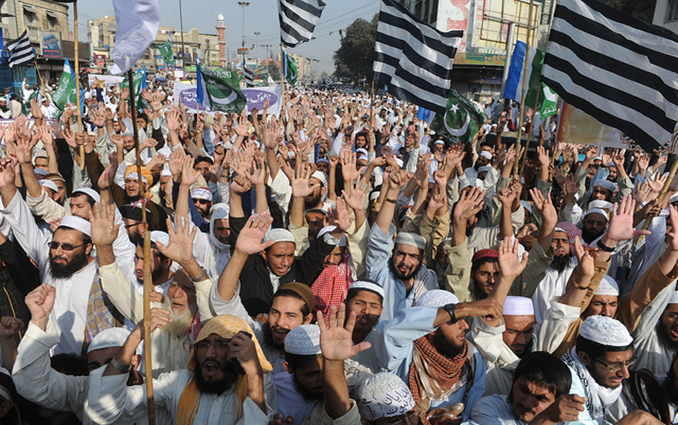
As the year end nears, right wing groups have spearheaded their campaign against granting MFN status to India, and foremost among them is the Jamaatud Dawa. The leaders of this are holding protest rallies and issuing statements almost daily across the country, maintaining that ‘granting MFN status to India was not beneficial for Pakistan’. Their concerns are related to religious differences and strategic issues between the two countries.

Pakistan announced in October 2011 that it will grant MFN status to India from January 1, 2013. Meanwhile, trade relations improved significantly between the two countries.

India had granted MFN status to Pakistan in 1996. However, non- tariff barriers remained intact on exports from Pakistan and both sides did not make much of progress towards trade liberalisation.

While all mainstream political parties are on board for enhanced and free trade with India, incidentally the move to delay granting MFN status to India is being spearheaded by the parliamentarians belonging to the ruling Pakistan People’s Party (PPP).

“Now when everything was in place for final approval, Senator Sughra Imam and MNA Noor Alam Khan both belonging to PPP have approached the top leadership of the country to delay the process,” said a senior commerce ministry official.

The agriculturalists have complained that after granting MFN status to India the local markets would be flooded with Indian goods which are cheap because of low input cost in India.

Meanwhile, experts and independent analysts have discounted concerns by both groups on the grounds that most matters have already been discussed during the past 2-3 years and also resulted in a relaxed visa regime between the two countries.

“The agriculturalists and right wingers are not being realistic – free trade is a reality of coming years,” said Dr Abid Sulehri, Executive Director, Sustainable Development Institute of Pakistan (SDIP).

He said that if Pakistan can survive after signing free trade agreement with China, than there is nothing to fear. Regarding the concerns of the right wing, he said: “They are in small numbers and have their own point of view which should not influence trade and commerce.”

However, the business community has reacted sharply to the visible delay and expressed concern.

“We have been working for more than two years continuously over the matter and huge investments have been made by both the countries in this regard – the delay is like falling back on the commitment,” said Iftikhar A Malik, Vice President Saarc Chamber of Commerce and Industry.

While objections raised by right wing groups are beyond its reach, the commerce ministry is holding meetings with the stakeholders in order to woo the agriculturalists.

“They are asking for more subsidies to make the sector competitive with India,” said Secretary Commerce Munir Qureshi.

“But we need to assess it thoroughly as there are three main branches of agriculture sector – fresh fruits and vegetables, commodities and the dairy,” he added.

It is important to note that the MFN status is to be granted by the Cabinet – the approval would be vetted by the law ministry and finally the commerce ministry will notify India in this regard.
Read more »

Sunday, 4 November 2012

Balochistan unrest: FC police powers mandate gets one-month extension


Balochistan unrest: FC police powers mandate gets one-month extension

Have conducted 26 operations, arrested many and recovered ammunition during two months, says IGFC.
QUETTA: The mandate for exercising police powers conferred upon the Frontier Corps (FC) for restoring law and order in Quetta was extended for one more month on Saturday, Express News reported.
Inspector General (IG) FC Major Gen Ubaidullah Khan said on the occasion that the FC had conducted 26 operations within the timeframe against terrorists and criminals.
He said that in these operations, they had managed to arrest many terrorists and criminals and had also recovered a great amount of arms, ammunition and explosives.
The Balochistan government had given this mandate two months ago and Chief Minister Nawab Aslam Raisani had been directed by an apex committee to extend it for another two months.
The cabinet, however, had failed to do so despite instructions as Raisani did not bring up the issue before cabinet members and left the meeting due to low blood pressure.
Read more »

Establishment destabilising Balochistan govt: Lashkari Raisan


Establishment destabilising Balochistan govt: Lashkari Raisan

Claims ground is being cleared for favourites in the future government. PHOTO: ONLINE/FILE
ISLAMABAD: 
Baloch leader Nawabzada Lashkari Raisani has said the establishment is actively destabilising Balochistan’s provincial government.
Talking to The Express Tribune on Saturday, he said political and constitutional turmoil in the province has been engineered by anti-democratic forces to create an administrative and political vacuum which their own ‘cronies’ can fill.
Lashkari, who resigned as PPP’s Balochistan chapter president and from his Senate seat in protest a few months ago, said the establishment had always played a negative role in Balochistan. In the past, he has also been very critical of the government and security agencies over the missing persons issue.
“The establishment plays a positive role in the affairs of every country in the world, but it is highly unfortunate that its role in our country has always been negative,” he maintained. Lashkari added that the character assassination of politicians was part of the dirty game it was playing in Balochistan.
Referring to Balochistan Assembly speaker Muhammad Aslam Bhootani’s purported refusal to convene an assembly session, he said the move was nothing more than a ploy to create more political and constitutional chaos in the province. He claimed the Supreme Court’s recent judgments on the province’s law and order situation and Asghar Khan’s petition also added to the prevailing pandemonium.
“I fail to understand the justification for further aggravating the current situation when general elections are about to take place,” he said, adding “it appears as if the ground is being prepared for those who will be toeing the establishment’s line in the future government.” Without naming Balochistan Governor Nawab Zulfikar Ali Magsi, Lashkari claimed the former was behind all plots against his brother Nawab Aslam Raisani. Lashkari also blamed provincial assembly speaker Bhootani and PPP Balochistan president Sadiq Umrani for collaborating with the governor.
When asked who he thought was behind conspiracies in Balochistan, he replied, “You should ask the governor.”
“These people have always been in power and know how to appease the establishment,” he said referring to the governor and provincial assembly speaker.
Published in The Express Tribune, November 4th, 2012.
Read more »

Balochistan unrest: Experts see Indian policy endorsement as a cover-up


Balochistan unrest: Experts see Indian policy endorsement as a cover-up

Govt lauds New Delhi’s support for democratic institutions in some insurgency-hit states. PHOTO: INP/FILE
ISLAMABAD: 
Pakistan’s rare endorsement of the Indian approach to tackling insurgency in some of its states is a pretext to intensify operations against Baloch nationalists, say experts.
In a statement earlier the interior ministry lauded India’s policy of allowing democratic institutions to thrive unhindered in Assam, East Punjab, Mizoram and Kashmir as a measure to counter armed insurgency in these states.
It was claimed that the government’s stance of appraising Indian strategy, which comes out as a commitment to democracy, is actually a path to avoid condemnation for various human rights issues surfacing in a province plagued by a deplorable law and order crises since years. “This is the first time they [the government] have publicly praised the Indian pattern, because it provides them a perfect cover-up for mala fide intentions and actions,” says political analyst Muhammad Ali Talpur.
This ‘new turn’ will allow operation against Baloch rights groups to intensify, Talpur said.
Former lawmaker Lashkari Raisani said that a “great game” was being played by law enforcement agencies in volatile areas of the province. “Sanctioning India’s approach is indicative of the government’s weakness,” said Raisani, who had left the ruling Pakistan Peoples Party to protest the government’s failure to quell unrest in the province.
“There is no coordination between the military establishment and the civilian government to resolve the issue in the province. How can you resolve the issue when almost all committees constituted by the government have failed to convene a single meeting?” asked Raisani. He had earlier called for a grand political alliance for setting up a new democratic order in Balochistan for the coming elections.
Involvement of foreign hands in Balochistan unrest, if any, should also be exposed by the government, he added.
Rule of law
The President of Balochistan High Court Bar Association, Zahoor Ahmed Shahwani, said that the apex court made it clear that the provincial authorities have failed to restore peace in the province and it’s now the centre’s responsibility to take up the issue immediately. “People don’t trust the provincial government now. Therefore they vest greater faith in the implementation of the law, which of course, will come through the Supreme Court,” said Shahwani, who is a petitioner in the Balochistan law and order case in the apex court.
Published in The Express Tribune, November 4th, 2012.
Read more »

Tuesday, 30 October 2012

Sale Value of Religious Zeal Blind spot of Pakistan’s media activism


A throng of supporters rally in favor of blasphemy laws in Karachi (Fatema Tabassum / IPS)

Sale Value of Religious Zeal Blind spot of Pakistan’s media activism


The former Governor of Punjab Salmaan Taseer was murdered by a religious extremist. The late Governor sought to initiate positive changes in Pakistan’s controversial blasphemy law, introduced by late General Zia-ul-Haq, the former military dictator who sent populist President Zulfiqar Ali Bhutto to the gallows and used Islam to legitimize his autocratic rule. Urdu press coverage of the bigotry and harangues of his murderer, Mumtaz Qadri (one of the late governor’s guards) led to a frenzy of demands for his acquittal.
The Blasphemy law needs to be reformed for two reasons:
1. It is used for vendetta, mostly to target marginalized individuals, especially from among minorities, in settling private scores. The strict punishment for blasphemy is the death penalty, even when the evidence is ambiguous.
2. It is a manmade law and like any other law should be open to debate leading to amendment.

Salman Taseer
Introduced by the British in 1860, the blasphemy laws applied to all religions. Their purpose at the time was to prevent communal conflicts in British India. The laws lay dormant for an extended period only to be reborn in a severe and ambiguous form in the 1980s during General Zia’s regime in Pakistan. In 1986, Section 295-C legitimized the death penalty for anybody who was accused of disrespecting the prophet of Islam. From the 1980s onward, there was a rampant increase in reported blasphemy cases. Blasphemy became a popular excuse to settle petty scores and most of the accused ended up in jail for long periods. Religious zealots in Pakistan, in the same way as Judeo-Christian fanatics in USA, whip up hate campaigns in the name of evangelism, and manage to exert tremendous pressure on lower courts and the police to indict and punish alleged blasphemers without due process of law. Since it was difficult to prove allegations of blasphemy, most cases took a long time to be settled, and in almost all cases the accused were either acquitted by the superior courts or punished by death.
Aasia Bibi, a Christian laborer and mother of five, was sentenced to death under the Blasphemy Law by a court in Nankana Sahib, Punjab in November 2010. She was the first woman to be sentenced to death under the blasphemy law (Pakistan Penal Code). The allegation against her was that she had  blasphemed against Prophet Muhammad during a quarrel with fellow Muslim women laborers. A mercy petition was prepared by Governor Taseer for President Asif Ali Zardari on November 20 2010 during his visit to the district jail. He stated at a press conference that she had been wrongly accused of the crime. Following Taseer’s appeal for mercy, a mob rioted outside the Governor House in Lahore, burning his effigy and calling for his death.
President Zardari at first said that he might pardon the Christian woman if she had been wrongly convicted. However, on the advice of his legal advisors, he stalled his decision, allowing the superior courts to review the conviction. The issue became a “bone of contention between the government and the mullah” (Guardian, U.K.) A section of the Pakistani media played a highly provocative role by presenting Taseer as an accomplice in blasphemy. The governor’s actual role was to stand up for minority rights and officially enter his plea against the misuse of the law. The Urdu print media, in particular, joined the chorus of religious parties in a vicious campaign that culminated in the brutal assassination of Governor Taseer. On January 4 2011, Taseer’s security guard, 26-year-old Mumtaz Qadri, fired his gun at the Governor 29 times, shooting him dead. He surrendered himself to the police saying: “Salmaan Taseer is a blasphemer and this is the punishment for a blasphemer.” (BBC)
In the past, religious parties played on the emotive issues of blasphemy and the finality of the prophet-hood of Prophet Mohammed for public appeal to suit their political ends. Often the Urdu media played into the clergy’s hands and created a public frenzy. Blasphemy cases have always been exploited in Pakistan by the vernacular media, which tended to ignore the persecution of minorities. Moeed Pirzada has noted how an otherwise robust media ignored the story of an alleged Hindu blasphemer, Jagdeesh Kumar, who was brutally murdered by a Muslim mob in Karachi’s industrial area (Daily Times, April 19 2008). Analyst Ziauddin found that the Pakistani press was suffering from a patent majoritarian bias.
The mullah and the media nexus over blasphemy has developed because the blasphemy story is a selling point. The Aasia blasphemy case provided yet another opportunity, this time for the electronic media, to exploit the public’s wild imagination through primetime television slots hungry for ratings in absurd competition. The religious right in politics is understandably determined to defend the gains it made in its collaboration with General Zia, who used Islamization as a pretext to prolong his authoritarian regime. General Zia won over the religious right by offering them the trophies of the blasphemy law and other controversial legislations, such as the Hudood Ordinance and Qanoon-i-Shahadat order. Successive legislatures dispensed with many amendments brought into the Constitution by successive military rulers but could not remove the controversial Islamic provisions. Pressure from the religious right and a scoop-hungry media playing to their tune ruled the roost.
Indeed the media spin over Governor Taseer’s initiative to obtain pardon for the wrongly convicted Aasia followed the familiar pattern of newsrooms racing to create news-stories rather than follow news events. Taseer’s official request for the due process of law, albeit with the fanfare of a press briefing, was deliberately turned into a “hot” story. The newsrooms ignored Aasia Bibi’s side of the story, her declarations that she respected the Prophet, and her plea that she had been falsely accused and jailed. Instead, a large segment of the media chose to present Aasia as a blasphemer deserving death who was being protected by a liberal, nonconformist governor. In addition, television channels covered long, passionate speeches by religious and nonreligious leaders inciting Muslims to take revenge on those who dared to show disrespect for the Prophet or even call for due process of law for anyone accused of blasphemy.
Sensationalizing the issue for their mass readership, Pakistan’s Urdu newspapers took the lead in farming negative rhetoric against Taseer and played a pivotal role in inciting the people to violence. The public reaction, along with TV channels, was initially divided. A group of civil society protestors in Lahore rallied on  November 21 2010 demanding Aasia’s release. Yet only a few days later, during a more charged public rally in the same city, an Aalmi Tanzim Ahle Sunnat leader, Pir Muhammad Afzal Qadri, appealed to Chief Justice Iftikhar Chaudhry to take suo moto notice against
Governor Taseer for defending the “blasphemer” Aasia Bibi. Threats were hurled at government functionaries, parliamentarians, and religious scholars who had expressed their reservations about the death sentence awarded to Aasia Bibi. Most Urdu editorials were vociferous in framing Taseer as a blasphemer. He was compared to his father M. D. Taseer, who had actively participated in the burial of Ghazi Ilam Din, a Muslim convicted of murdering a Hindu accused of blasphemy in the 1920s. Repeated columns raised the question: How could the son of an aashiq-e-rasool (lover of the prophet) support a blaspheming woman?
Numerous articles in the Urdu press were bent upon discrediting Taseer for having brought shame to the Muslim ummah (brotherhood). A section of the Urdu press deliberately distorted Taseer’s argument for procedural revisions necessary to stop misuse of the blasphemy law. Sherry Rehman, a leading parliamentarian of the ruling Pakistan People’s Party and Asma Jehangir, president of the Supreme Court Bar Association, were castigated for expressing their dissent over the misuse of the blasphemy law. On the other hand, the English press, with its limited readership, garnered very little public attention on behalf of its advocacy for corrections, as the law was flawed.
Taseer’s preliminary news conference favoring Aasia’s release was presented on November 20 2010, and was covered in television as part of general news segments. Eventually the TV coverage followed the sensationalism of the print media. Javed Chaudhary, in the introduction to his program “Kal Tak” (aired on November 22 2010 on Express News), attempted to present Taseer as a governor bent on pleasing the Pope, America, and other western countries by supporting a Christian woman. He obtained, however, a broad spectrum of opinion in his choice of guests, inviting Shahbaz Bhatti, the federal minister for minorities, Dr Atiq-ur-Rehman, secretary general of Jamiat Ulema-e-Islam (F), and Tahira Abdullah, a human rights activist, onto his panel. He pursued a provocative style and did not balance his questions, but he offered equal space for a fair debate among the guests in his program. Atiq-ur-Rehman defended the blasphemy law and Tahira Abdullah argued that it has been reduced to a political tool for many political players. Shahbaz Bhatti, by giving facts about the misuse of the law, brought some sense of objectivity and rationality to the discussion.

Anchor Najam Sethi’s program on the blasphemy law (aired on November 22 2010 on Dunya TV) was more of a balanced debate. Apart from his researched analysis, his program included a news package on the Aasia Bibi case, a short interview with Governor Taseer, a brief chronology of the blasphemy law, and contributions by the Punjab law minister Rana Sana Ullah and religious scholar Javed Ghamdi. His documentation displayed objectivity, and his analysis was candid.On November 23 2010, Express TV took up the Taseer/Aasia story and provided the religious clergy extra space to denounce the governor. Mubashar Luqman’s program “Point Blank” included Hafiz Butt (Jamaat-e-Islami), Allama Abbas Kashmiri, and Mufti Abdul Kareem (Jamaat-e-Ahlesunnat, Pakistan) as guests. Luqman himself, though, blamed his guests for turning a legal debate into a religious issue, but it did not have much effect.
One of the most controversial talk shows was conducted by Samaa TV anchor Meher Bokhari on November 25 2010. Bokhari conducted a satellite interview with Governor Taseer on Aasia Bibi. She venomously put Taseer in the dock and narrowed her questioning line to bypass the merit of the case itself and seek the governor’s answer to vilifications in the Urdu press and to insinuate a betrayal of his father’s ideals. Most of the time, Bokhari either put words in his mouth with the intention of distorting his points, or refused to let him finish by rudely cutting him off.
She shouted at him thrice and once waved a supposedly secret document in his face, bluffing and confusing the TV audience with a hint of dark suspicion. In yet another program, Bokhari went to the extent of admirably comparing Taseer’s murderer Mumtaz Qadri to the “heroic” legacy of Ghazi Ilam Din.
Pakistan’s sensationalist news channels certainly played a dubious part in blurring the distinction between law and emotion in the public mind, and whipping up hostility toward Taseer. The lead part was taken by Meher Bokhari. As Huma Yusuf noted in the Dawn, January 31, 2011: “Pakistan’s electronic media industry is known for creating an atmosphere of perpetual crisis. Bokhari is particularly accused by many critics, especially among the new media, of fanning the hysteria over the Taseer/Aasia story that eventually led to the governor’s tragic death. By crossing all ethical limits, Bokhari led the hysteric misrepresentation of the case for the gutter media to follow, inviting mass critique on popular blogs.”
Indeed, breathing in the atmosphere created by some television channels and most Urdu newspapers, the Taseer/Aasia discussion found space in the social media on various blogs, Twitter, and Facebook. Anchors like Meher Bokhari were discredited on blogs such as Kala Kawa and Café Pyala. But she was hailed on websites such as pkpolitics.com for the same show: “Shahid Masood and Kamran Khan are losing their rating. So today I will only give 1/10 to Kamran Khan and 0/10 to Dr Shahid Masood. I will give Mehar Bokhari 10/10 because she tackled Salman Taseer very well.”
It is possible that innumerable blog posts hailing Bokhari’s instigating style and the outspoken Taseer’s frankness may have attracted higher ratings. The media was quick to realize that the audience was not warming up to balanced talk shows, but applauding Bokhari who was appealing to deeply-rooted religious prejudices. The objective media appears thereafter to have turned tail and given space to a hate campaign. Amplified negative coverage on channels such as Royal TV, Apna, and Waqt, where numerous budding journalists tried to copy Bokhari’s passionate indignation, brought about the doom of a right-minded governor. The Mardoch syndrome in U.K. could not have such tragic victims as were targeted in Pakistan in the increasingly competitive media environment, in which newsmen and TV anchors consider it their journalistic prerogative to selectively pick on misinformation or themselves raise suspicions without proper research or evidence, and hype malicious stories only to boost their sales. TV anchors in Pakistan come largely from the Urdu press. As such, they tend to be oriented toward rightwing conservatism like Fox News in the USA. Some of them have developed or style of ‘hard talk’ that amount to heckling of guests without giving them adequate time for rebuttal. Their ‘unmasking’ technique may or may not earn them media star status, the damage they may do to causes or persons are enormous, particularly when vulnerable communities are involved.
On the blasphemy issue, audience response to Bokhari exemplifies the black magic of media power. Some analysts surmise that the Pakistani media was deliberately developing an audience with a specific extremist mindset, espousing sensationalism and leaving little room for object-ivity. Private channels may be unwittingly orchestrating doctrinaire campaigns of religious extremism by the manner in which they selectively seek and broadcast public opinion samplings.
Some anchors look toward a market that is more responsive to sensationalism and scandal-mongering. They do not care about possible traffic consequences of their unscrupulous media activism. The Domino effect of glorifying Mumtaz Qadri, the assassin of Governor Taseer, on the screen as a “hero of faith” was rolling social media applause and a Facebook page saluting him for “heroic” defiance of the law by stabbing his master in the back, so to say, in a cowardly act of assassination.
Governor Taseer was not the only victim of Blasphemy Law frenzy. Lahore High Court judge Justice Arif Iqbal Husain Bhatti, who acquitted two Christian youths, Salamat Masih and Rehmat Masih on charges of blasphemy, was assassinated in 1997. Minorities’ voices had been so suf-focated that, in May 1998, a Catholic bishop, John Joseph, shot himself dead as a protest. Former strongman President Pervez Musharraf too had to give in to the threats of the mullah. He recalled a directive that would have looked into complaints of misuse of the blasphemy law.
As the politicians lack necessary moral courage to take a firm stand on the issue, it is up to the civil society and a strong human rights movement to turn the table on the fatal peddlers of religious bigotry and uphold the age of reason. ■
Read more »

Changing times: Before the urbanite invasion, Bani Gala was a rustic haven for shepherds


Changing times: Before the urbanite invasion, Bani Gala was a rustic haven for shepherds

Published: October 30, 2012
There are few open spaces left for herds to graze in after settlers began moving to villages on the capital’s periphery. PHOTO: MUHAMMAD JAVAID/EXPRESS
ISLAMABAD: 
When Bani Gala was still an idyllic little village on the banks of Rawal Dam, Razia and her siblings used to shepherd goats all day long. They would set off early morning with a tea kettle and a picnic hamper, playing games and swinging from tree swings.
The series of rolling hills and fertile plains dotted with streams in the capital’s suburbs were once ideal for herding. A spillover of urbanites has changed the face of the villages on Islamabad’s periphery and their residents’ lifestyles.
As settlers poured in, attracted by the proximity to the city, locals-turned-realtors attracted by skyrocketing real estate prices, grabbed all the shamilaat (common land) earmarked for pastures in Bani Gala. With the result that herds can only graze on government land now.
While Razia has great childhood memories of the time she herded goats, she is worried her family cannot continue with their ancestral trade. She is full of stories of strange spirits who would wander after dark and soldiers who came for shooting drills. “We would collect spent cartridges and sell them to buy biscuits and sweets.”
There were a few scattered homes of landowners in the fields and forests. There was no traffic, except for a few bikes and donkey carts and the goats wandered freely. Once, our herd entered the woods, she said. “Forest officials drove up before we could divert them.” I threw stones at the goats to scatter them and they sped downhill right past the officials waiting to intercept them, she recounted with glee.
“Had the officials caught one of us or our goats, Father would have had to pay a fine. But we dispersed and hid in the undergrowth.” Now the hills are practically bare and houses have sprung up everywhere, even on the slopes, she added wistfully.
Herdsmen hadn’t anticipated the rapid development that ensued and did not diversify their livelihood or invest in their children. “It’s impossible now to keep large herds; there are hardly any open spaces where we live,” said Razzaq. There are not enough pastures for them to graze in and we cannot afford to feed them, his son, Esa chimed in.
The water is now polluted and the village littered with garbage. Every summer, deliberately-ignited fires scorch hectares of forest.  What was previously a profitable trade with guaranteed returns, is now risky business. The night before Eid, alerted by the dogs, his grandfather foiled an attempt to steal their goats.
Esa has been shepherding goats from the age of six or seven. I would not know what to do without them, he said. “There are frequent thefts thanks to the greater number of vehicles and our goats choke on the plastic disposed in the open.” He lost his prize goat to a polythene bag a few days ago. It would have fetched Rs20,000 on Eidul Azha.
Esa’s father is a labourer and barely makes enough to feed the family, while Razia’s father lives off the income from selling goats. With prices of goats doubling over the past few years, the business is mostly seasonal, hitting its peak on Eidul Azha. Her mother died from cancer, because they couldn’t afford surgery.
It’s the same story in Shadara. For Abid, development has come at the price of his only means of livelihood, while not benefitting him in any way. For the past two years, he has to spend the pre-monsoon summer in Kaghan, where his herd can graze in the meadows and drink their fill at considerable expense. But not everybody can afford the trip. Naturally, he recovers the cost by demanding higher prices for his goats on Eidul Azha.
Despite changing circumstances, there is little realisation that education might offer alternative opportunities, considering the youngsters are not inclined towards hard labour, the only alternative option.
Published in The Express Tribune, October 30th, 2012.
Read more »

Sunday, 28 October 2012

Against constitutional rights’: JuD fights ban in court, in vain


Against constitutional rights’: JuD fights ban in court, in vain

The counsel said the ban is a clear violation of the petitioner’s fundamental rights enshrined in the constitution of Pakistan.PHOTO: MUHAMMAD JAVED/FILE
LAHORE: 
The Lahore High Court (LHC), on Thursday, denied relief to Jamaatud Dawa (JuD) against a ban imposed by federal government on its activities, including collection of sacrificial animals’ hides.
On behalf of JuD chief Hafiz Muhammad Saeed, Advocate AK Dogar said the ban was imposed in light of a resolution passed by United Nations Security Council, while his client’s organisation is not proscribed under any law of the land.
The counsel said the ban is a clear violation of the petitioner’s fundamental rights enshrined in the constitution of Pakistan.
Chief Justice Umar Ata Bandial, however, said the federal government imposed the ban to fulfill its international obligation as a member of the United Nations.
“How can the court suspend international obligations of the country?” Justice Bandial asked.
He advised the counsel to not use a court of law to abolish the ban and establish that JuD is a public welfare organisation.
Advocate Dogar said the ban was imposed days before Eid which “clearly showed” the mala fide nature of the decision.
The chief justice, however, refused to issue any stay order without seeking reply from the government. He rejected the stay application and issued notice to the federal government for next week.
Meanwhile, Advocate Dogar told The Express Tribune that JuD would receive hides at its camps but not collect any by going to people’s houses.
Read more »

Cost of progress: Kurrum Tangi Dam project likely to displace 12,000 people


Cost of progress: Kurrum Tangi Dam project likely to displace 12,000 people

Report urges govt to review impact of dam being built in K-P. PHOTO: FILE
ISLAMABAD: 
Around 12,000 people living in 32 villages will be displaced owing to the construction of the Kurrum Tangi Dam in Khyber-Pakhtunkhwa (K-P), according to a report by a consultant.
The report has urged the federal government to review the environmental impact and resettlement plan for the Kurram Tangi Dam, which will also dislodge a number of schools and health facilities.
Furthermore, the cost of the dam, planned to be constructed across the Kurram River, about 19 miles north of Bannu city, has increased by almost Rs42 billion due to inactivity on the project in the last seven years as the budgeted amount was not released by the government.
According to Wapda estimates, in 2004, the dam would have cost Rs17.2 billion, but owing to inflation and an upgraded design, it would now cost Rs59.5 billion, the report stated.
It further recommended generating funds from international donors to resettle the displaced people.
Sources said that about 11,000 acres of land required for the water reservoir has a population of about 12,000 living in 32 villages, with an average size of seven persons per family. Their economic grouping includes landowners, tenants, herdsmen, and so on.
They will need to be resettled due to the inundation of the reservoir area. In addition, 142 cattle sheds, 266 wells, 47 watercourses, about 20 kilometres of roads, about 43 km dirt tracks, 29 primary schools, 11 middle/high schools, one vocational training centre, three madrassas, a hospital, two basic health units, two mother and child health centres, and three veterinary clinics will also be affected.
An Environmental Impact Assessment (EIA) for the project was conducted in 2004 as part of an overall feasibility of the project.
“The review of this EIA during the present assignment has revealed that it needs to be significantly upgraded to meet the national regulatory requirements,” the report added.
It said baseline surveys need to be repeated to gather information about those likely to be affected by the construction of the dam.
As estimated by the EIA in 2004, about 15,000 acres of land would be required for the entire project, including the dam, reservoir, powerhouses, and canals of which about 12,200 acres or 83% are privately owned, while about 2,600 acres or about 17% is state owned.
Almost 75% of the land is required for the reservoir, which means about 1,700 acres of agricultural land would be lost.
Since 2004, the design has been optimised and the height of the dam has been raised to 322 feet (98 metres), increasing the reservoir area to 11,000 acres, and the storage capacity to 1.2 million acre feet.
The construction of three new canals for the project will require about 2,300 acres of land, 25% of which is in the militancy-hit tribal territory of North Waziristan Agency, while the remaining 75% lies in the Bannu district. About 1,000 acres will be covered by construction of project structures like the main dam including its appurtenant structures, powerhouses and the weir on Kaitu River.
Read more »

Saturday, 20 October 2012

Religious fragmentation based on misinterpretation leads to extremism'


'Religious fragmentation based on misinterpretation leads to extremism'


Bridging the gap amongst individuals, states by common understanding and sharing of knowledge about law, peace and religion and exploring the factors that can help in achieving the objective of global peace, says Justice Chaudhry. PHOTO: ONLINE/ FILE
LAHORE: Chief Justice Iftikhar Muhammad Chaudhry said Saturday that religious fragmentation, without understanding the true spirit and philosophy of religions, has given rise to terrorism and extremism and is affecting global peace. 
He was speaking at the “Peace through Law” International Conference in Lahore.
The chief justice said that Islam was undoubtedly a peaceful religion as were all other religions. It was the lack of understanding of the true spirit of the religions that was creating these differences.
“Islamic teachings are oriented towards achievement of peace, brotherhood and human welfare,” he said.
“I believe that like Islam, all major religions of the world carry the message of peace-making and peace-keeping,” he added.
“It is unfortunate that human kind has got fragmented into religious and ethnic sects and groups without understanding the true spirit and philosophy,” said Justice Chaudhry.
“These deep-rooted rifts have given rise to terrorism, bloodshed, extra-judicial killings, human rights violations and other evils that are perpetuating extremism and radicalism and affecting global peace,” he added.
He said that the best way to address these issues was “through bridging the gap amongst individuals and states by common understanding and sharing of knowledge about law, peace and religion and exploring the factors that can help in achieving the objective of global peace”.
“Restoration or maintenance of peace and harmony through adherence to rule of law is the increasingly acceptable mean for resolving conflicts and terrorism, be it at the international or domestic level,” he added.
‘Islam a religion of peace’
“It is a matter of importance undoubtedly that as far as our religion Islam is concerned, being a great religion, conveys the message of peace,” said the chief justice.
“There is no basis for violence of Islam.”
Quoting from the Quran, the chief justice said that the opening verse read ‘in the name of Allah, the most Merciful and the most beneficial’ which was repeated 140 times throughout the Holy Book.
He said this verse shows mercy and compassion to be dominant traits of Islam.
Moreover, he said, the Holy Book sets peace as the destination of Islam and quoted another verse from the Quran.
“Most verses of the Quran are directly or indirectly aim at propagating peace and abhorring oppression and violence,” he added.
Justice Chaudhry said that the conquest of Makkah under the leadership of the Holy Prophet (pbuh) is a great example of peace when Muslims, despite being in a dominant position, conquered the whole city without bloodshed or violence.
“Peaceful methods of settlement of dispute are preferred options of contemporary religion,” added the chief justice.
“In my view genuine peace between those who are in a state of conflict can only be brought about through peaceful settlement… such a settlement can be made acceptable to conflicting parties only when they are assured that the settlement is fair and will be enforced through the force of law,” he said.
The chief justice said that without the guarantee of law behind it, no settlement can last very long and without such settlements, peace cannot be established, and added that the reverse of this was also true: If the disputes can be settled legally, people have no need to start a conflict.
Read more »